
One Protein, Many Vulnerable Brain Regions, Two Closely Related Diseases
Shared biology links Parkinson’s and Lewy body dementia, revealing clues that can guide future therapies.
One Protein at the Center
At the heart of both Parkinson’s and dementia with Lewy bodies is a small protein called alpha-synuclein. Normally, it helps nerve cells communicate. But in these diseases, the protein can fold into the wrong shape, become sticky, and clump together inside the nerve cell, much like a traffic jam that disrupts everything around it.
The Impact on Nerve Cells
Over time, these deposits can grow into large Lewy bodies, while abnormal alpha-synuclein also collects along the nerve cell’s branches as Lewy neurites. These changes interfere with the cell’s ability to communicate, generate energy, and clear away waste. This shared alpha-synuclein pathology is why Parkinson’s and dementia with Lewy bodies belong to the same family of diseases: the synucleinopathies.
How Alpha-Synuclein Damages Nerve Cells
Cellular Waste Accumulates
The systems responsible for breaking down and removing damaged proteins can become overwhelmed. As abnormal alpha-synuclein continues to accumulate, the cell becomes less able to restore its normal balance.
Energy Becomes Scarce
The mitochondria, which supply cells with energy, can become damaged. This is particularly dangerous for nerve cells because they require enormous amounts of energy to maintain their long extensions throughout the brain and generate electrical activity continuously.
Communication Breakdown
The connection between nerve cells—known as synapses—may stop working properly, making it harder for brain networks to exchange information. A little like parcels piling up in an overcrowded distribution center. Messages are delayed or lost, and connected brain regions can no longer coordinate their work efficiently.
The Brain’s Defense System Stays on Alert
The brain’s immune cells recognize misfolded alpha-synuclein as a warning signal and trigger inflammation. At first, this response may help clear damage. But if the alarm stays active, inflammation can begin to stress nearby cells and contribute to further injury.
A Brain-Wide Pattern of Vulnerability
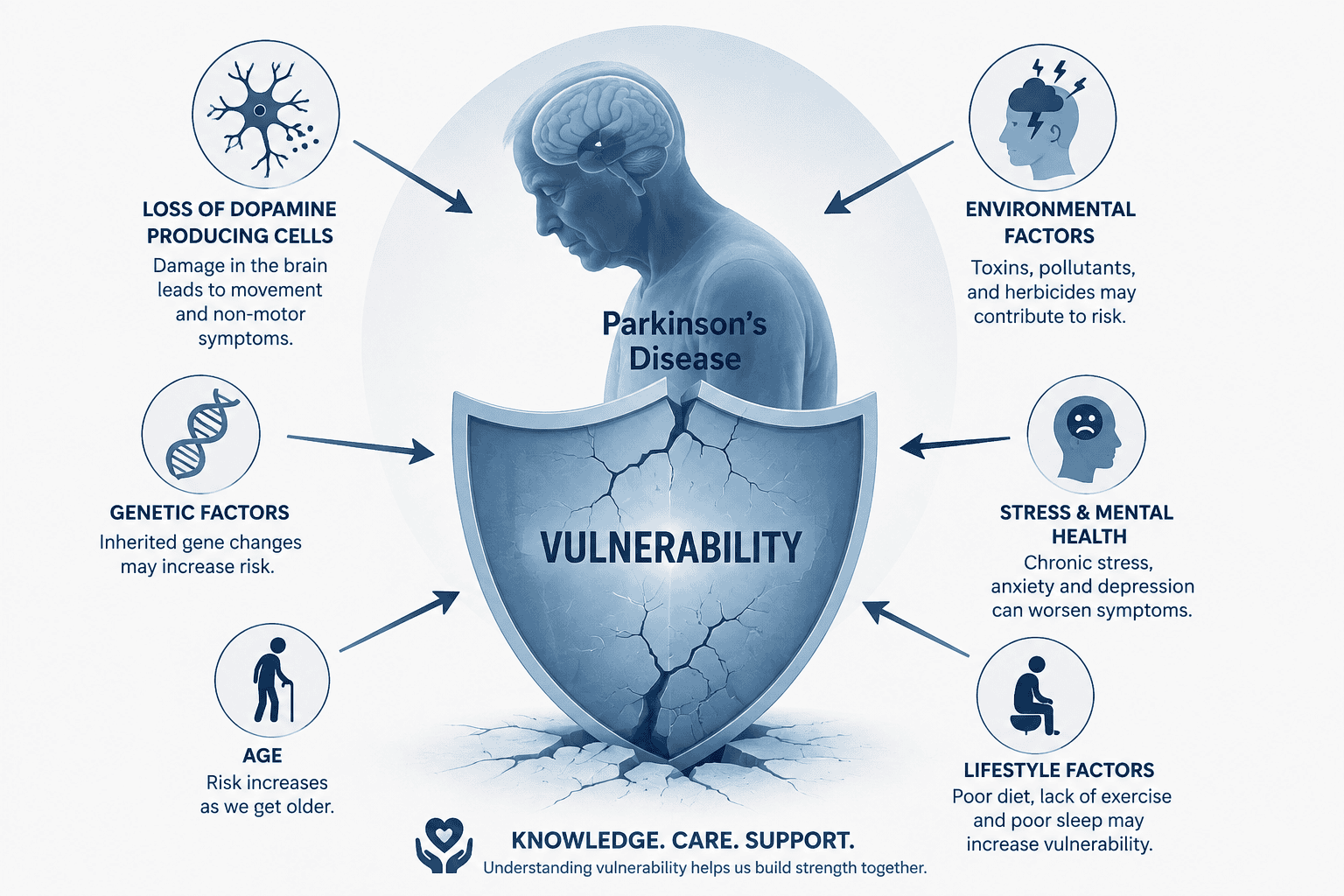
Parkinson’s and dementia with Lewy bodies do not affect the brain like a single light switching off. It is more like a network in which certain critical hubs become damaged while others continue to work. Dopamine-producing cells are especially vulnerable, but they are only part of the story. As other nerve cell populations and brain circuits are affected, people may experience changes in sleep, mood, smell, digestion, attention, and thinking symptoms that can be as disruptive as movement difficulties.
Learning From Resilient Cells
One of the field's biggest questions is why some cells fail while nearby cells remain resilient. American Friends of ParkinsonFonds Deutschland supports research into this selective vulnerability because the answer may reveal the brain’s own protective strategies and show us how to turn them into treatments that preserve vulnerable cells and slow or stop the disease.

Shared Pathology, Different Routes
Misfolded alpha-synuclein may move from one nerve cell to the next along the brain’s connected pathways. Once inside a new cell, it can encourage more alpha-synuclein to misfold like one faulty template creating copies of itself. Over time, this chain reaction draws additional brain regions into the disease process. In Parkinson’s, the pattern often becomes most visible when brainstem and midbrain circuits, especially dopamine-producing cells in the substantia nigra, are heavily affected.
Tracing the Path of Disease
In dementia with Lewy bodies, limbic and cortical networks involved in attention, alertness, visual processing, and thinking tend to be affected earlier or more extensively. These routes vary between individuals, but learning where pathology travels—and how to interrupt it—could open a direct path to new treatments.
More Than Alpha-Synuclein
Alpha-synuclein is central to both diseases, but it may not act alone. Some patients, particularly those with dementia with Lewy bodies or cognitive impairment, also have beta-amyloid and tau pathology, the proteins most strongly associated with Alzheimer’s disease.
A Complex Mix of Pathologies
These coexisting changes may influence which symptoms develop, how rapidly the disease progresses, and how a patient responds to treatment. Understanding each person’s particular combination of pathologies may therefore be essential for future personalized therapies.
Understanding the Biology to Find a Cure
“We need to know why alpha-synuclein begins to misfold, how it moves through the nervous system, and why certain nerve cells are damaged while others remain resilient. With your help, American Friends of ParkinsonFonds Deutschland is funding projects to solve these questions and bring us closer to a cure.” Quote by Fanni F. Geibl-Henrich, MD, PhD.